Overview
I led the end-to-end design of Sensi AI, a conversational operating system for small aesthetic clinics where patients, appointments, photos, consent forms, and follow-ups were scattered.
The product turns WhatsApp into the operator’s main interface and a web dashboard into the administrator’s control center, both connected by an AI layer with relational memory.
The challenge
Small aesthetic clinics operated with fragmented information and processes that depended on the receptionist’s or owner’s memory.
Information without memory
Patients lived in notebooks, Excel, and WhatsApp; clinical photos on phones; consent forms in folders; and scheduling in separate tools.
Lost follow-up
30-day checkups, no-shows, and inactive patients depended on manual reminders that no one could measure or scale.
The sentence that defined the challenge was: “if I’m not here, nobody knows anything about the patient.” The real cost was operational dependence on the owner.
Objective
Design a system to operate a full clinic without leaving WhatsApp, maintaining a single source of truth and reducing dependence on the owner.
Immediate adoption
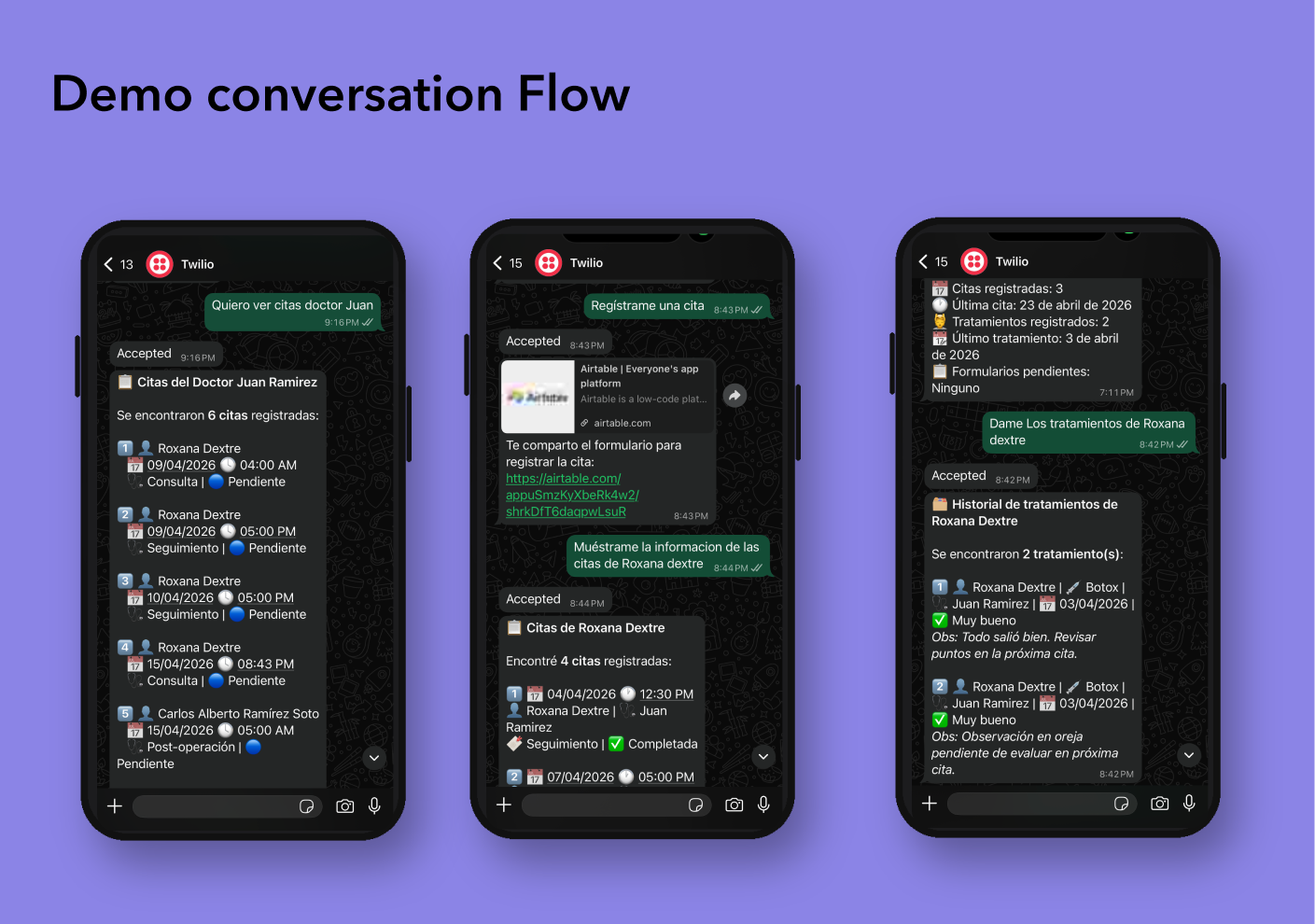
Enable operators to register, consult, schedule, and follow up through an interface they already know: WhatsApp.
Proactive platform
Move from a reactive assistant to a CRM with memory, automated alerts, and useful reports for administration.
North Star metric
Increase tasks completed without leaving WhatsApp from 0 to 80% to reduce operational friction.
My role and scope
I owned the full Product Design and Product Ownership cycle in a founder-led context, connecting research, strategy, conversational design, and MVP delivery.
Research and strategy
I interviewed real operators, observed their tools, and mapped the clinic’s 6 critical processes.
Product architecture
I defined the relational data model, intent system, decision tree, and conversational design rules.
Functional MVP
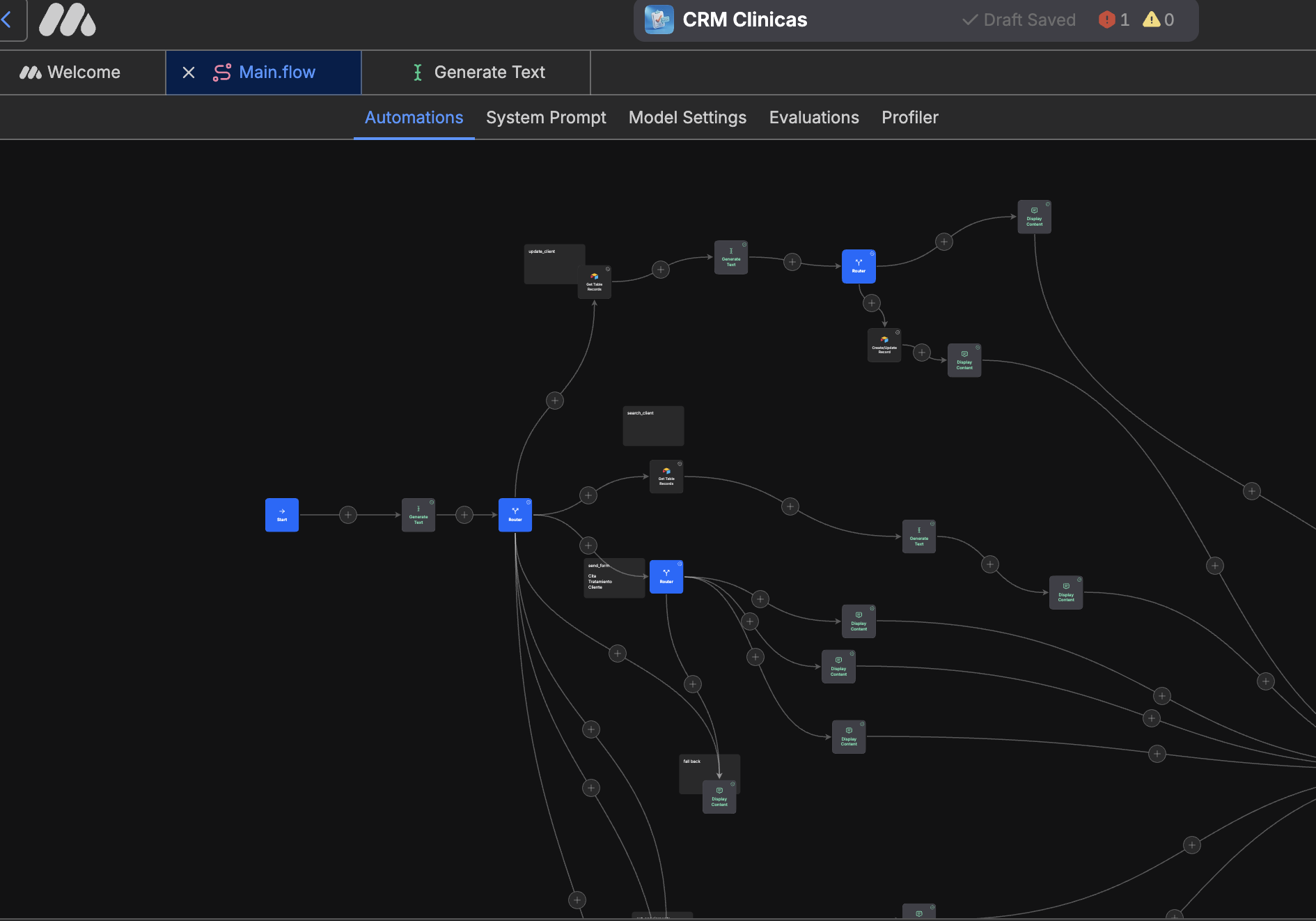
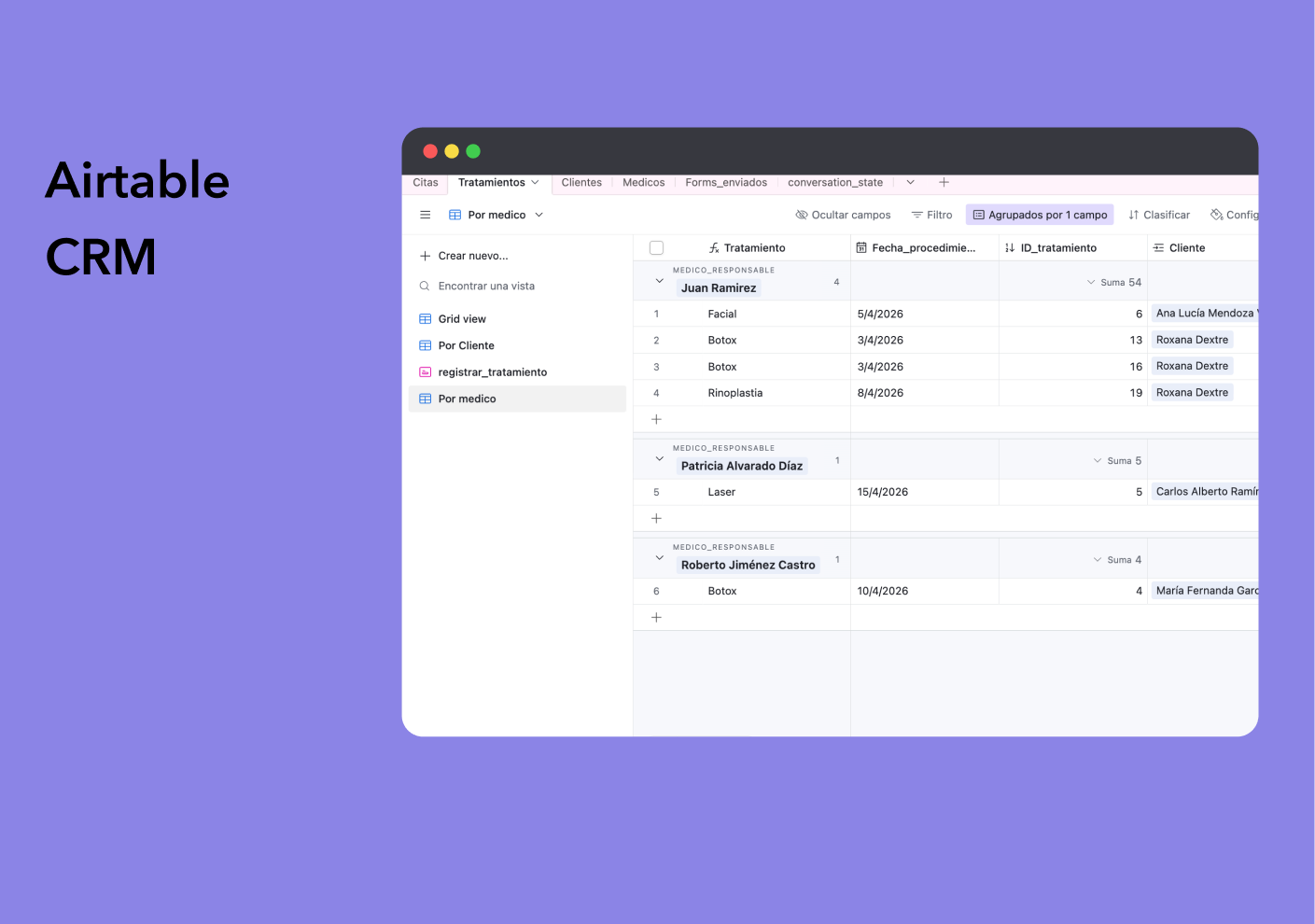
I designed the admin web dashboard and connected WhatsApp, AI, database, and storage through a low-code layer.
How I worked
I started from operational reality: observing how receptionists and the owner used WhatsApp, Excel, and physical files while serving patients.
Critical processes
I mapped acquisition, evaluation, scheduling, execution, post-treatment, and administration to identify where data was lost.
Two channels, one intelligence
I separated WhatsApp for operators and the web dashboard for admins, both connected by the same business memory.
Conversational interface
I defined when to ask through chat, when to send a form, how to confirm data, and how to recover from errors.
Deliverables
1. Agentic architecture
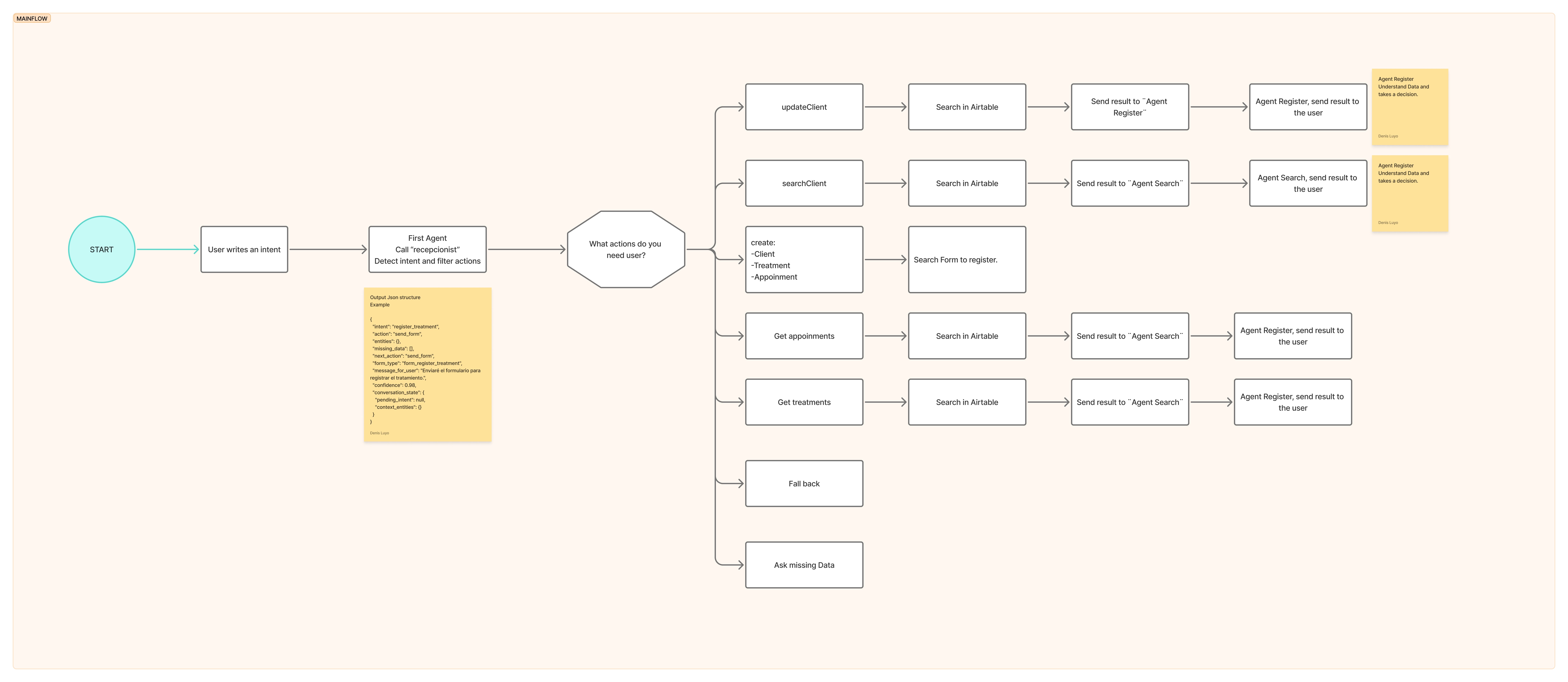
Input → Interpretation → Decision → Action → Record flow to turn WhatsApp messages into traceable operations.
- Intents to register, consult, schedule, and follow up.
- Conversational rules for chat, forms, confirmation, and error recovery.
- Automatic recording on a database with relational memory.
2. Admin web dashboard
Control center for automated reports, proactive alerts, and accumulated business intelligence.
The dashboard serves the owner without forcing operators to change their daily way of working.
3. MVP and commercial narrative
Functional MVP on a low-code layer with WhatsApp, AI, database, and storage APIs.
I included pricing structure, plans, and product narrative to justify a paid monthly model.
Impact
Productivity increase reported as the project’s key outcome.
New patient registration in tests, compared with an approximately 5-minute manual flow.
Registration, consultation, scheduling, and follow-up completed without opening an external system.
Project Gallery
Learnings and improvements
-
01
The interface is not always a screen
Designing a well-structured conversation can be more respectful to the operator than forcing them to learn a new app.
-
02
AI is valuable because of the context it accumulates
The differentiator was not only answering messages, but building relational business memory that could trigger decisions and follow-up.
-
03
Founder and designer should not decide the same way
As a founder I wanted to launch more; as a designer I had to validate, discard, and protect the MVP scope.