Overview
As UX Lead, I designed a cross-functional framework so different projects could make design decisions with clear metrics, even in contexts with low data maturity.
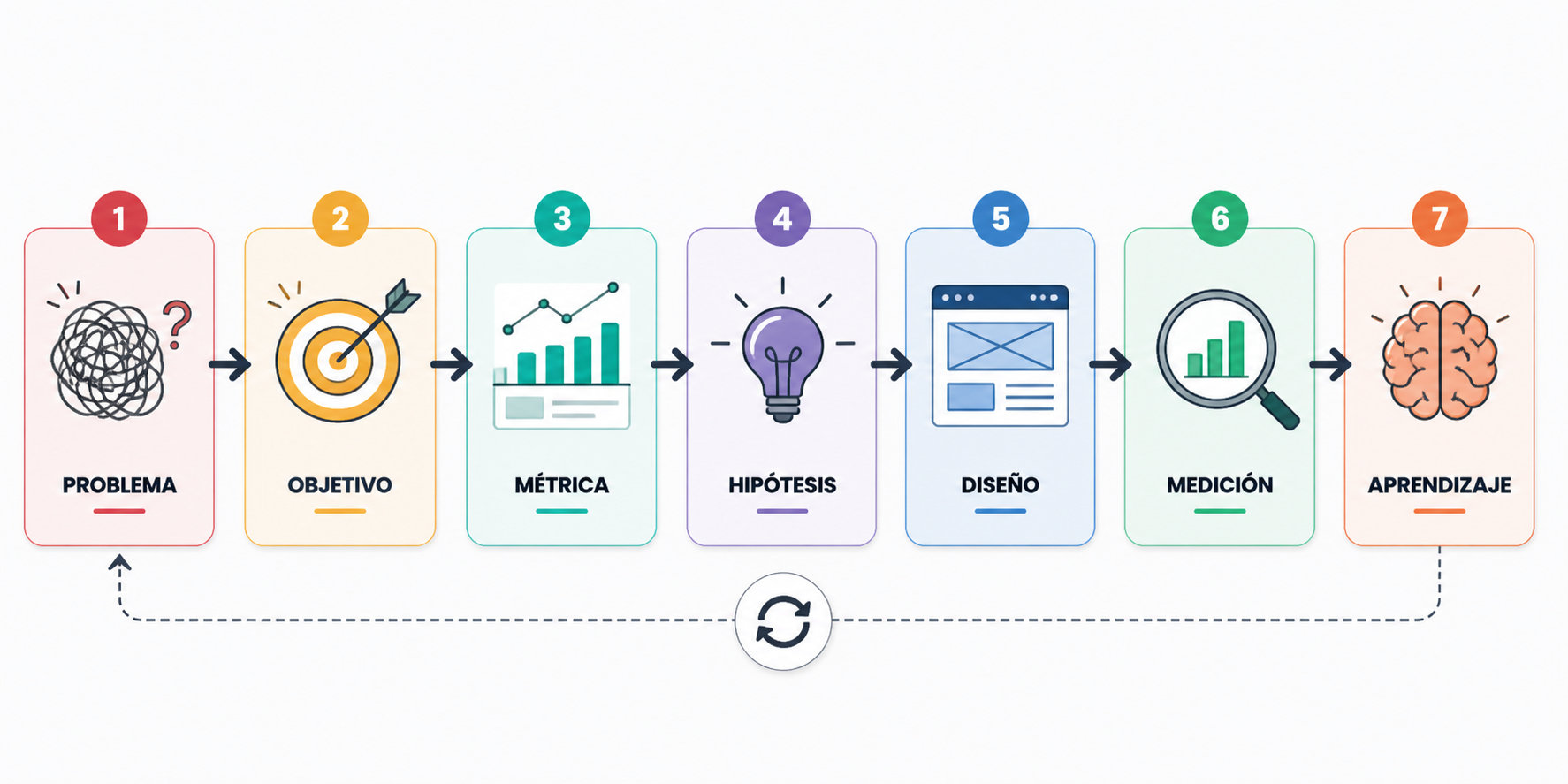
My focus was structure, strategy, process, and adoption. I did not design screens: I designed how the team understands problems, formulates hypotheses, and learns from evidence.
The challenge
The team was working on projects where design was not always connected to business or evidence. I found:
Opinion-based decisions
Designers worked without clear metrics, and each project made decisions differently.
Low impact clarity
Design had difficulty proving value, prioritizing initiatives, and gaining structured influence.
The main challenge was shifting conversations based on opinion into measurable decisions aligned with the business.
Objective
Create a UX Metrics framework that helped connect business problems, design decisions, and available evidence across projects with different maturity levels.
Measure with intent
Define what should be measured based on the problem, goal, and available evidence, instead of using a generic metrics list.
Align decisions
Give design, product, data, and business a shared language to prioritize initiatives and discuss impact.
Scale learning
Turn hypotheses, metrics, and findings into a repeatable practice for teams and future projects.
My role and scope
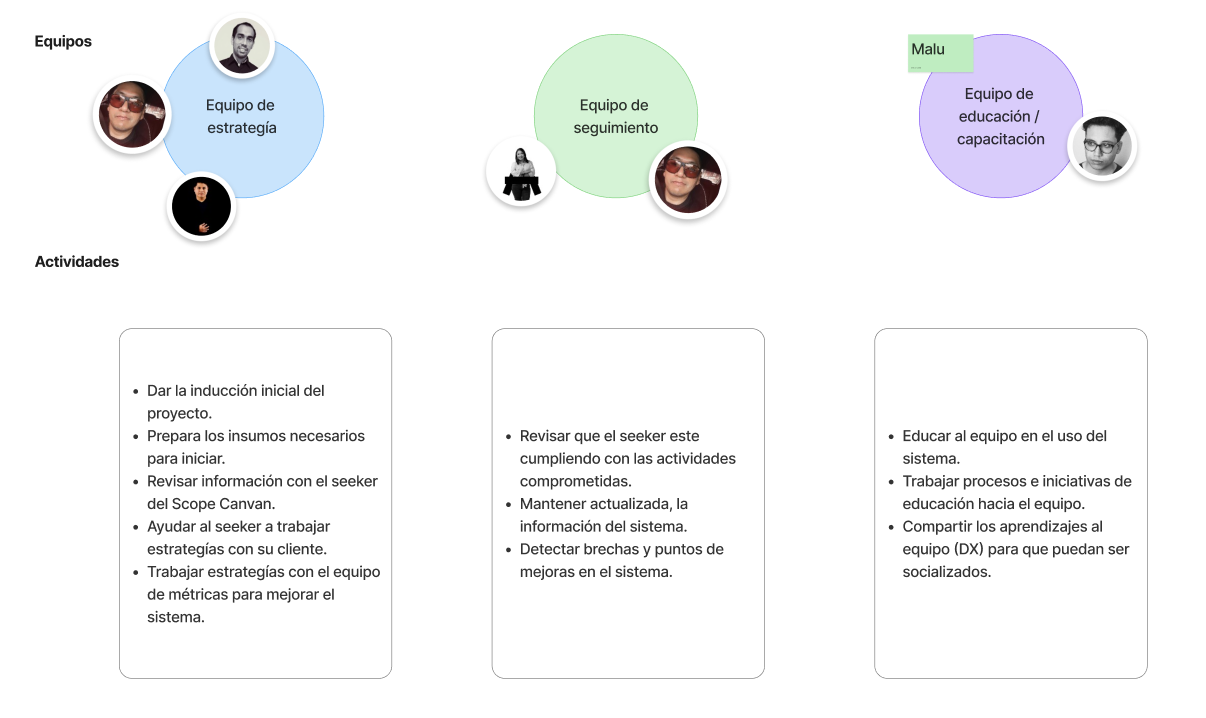
I led the strategic definition of the framework, facilitating alignment between design, business, and data to turn measurement into an actionable practice.
UX Lead
I defined criteria, structure, and narrative so the framework could be understood and applied by the team.
Chapter Lead
I supported adoption through a shared working logic for designers, stakeholders, and product teams.
Strategic scope
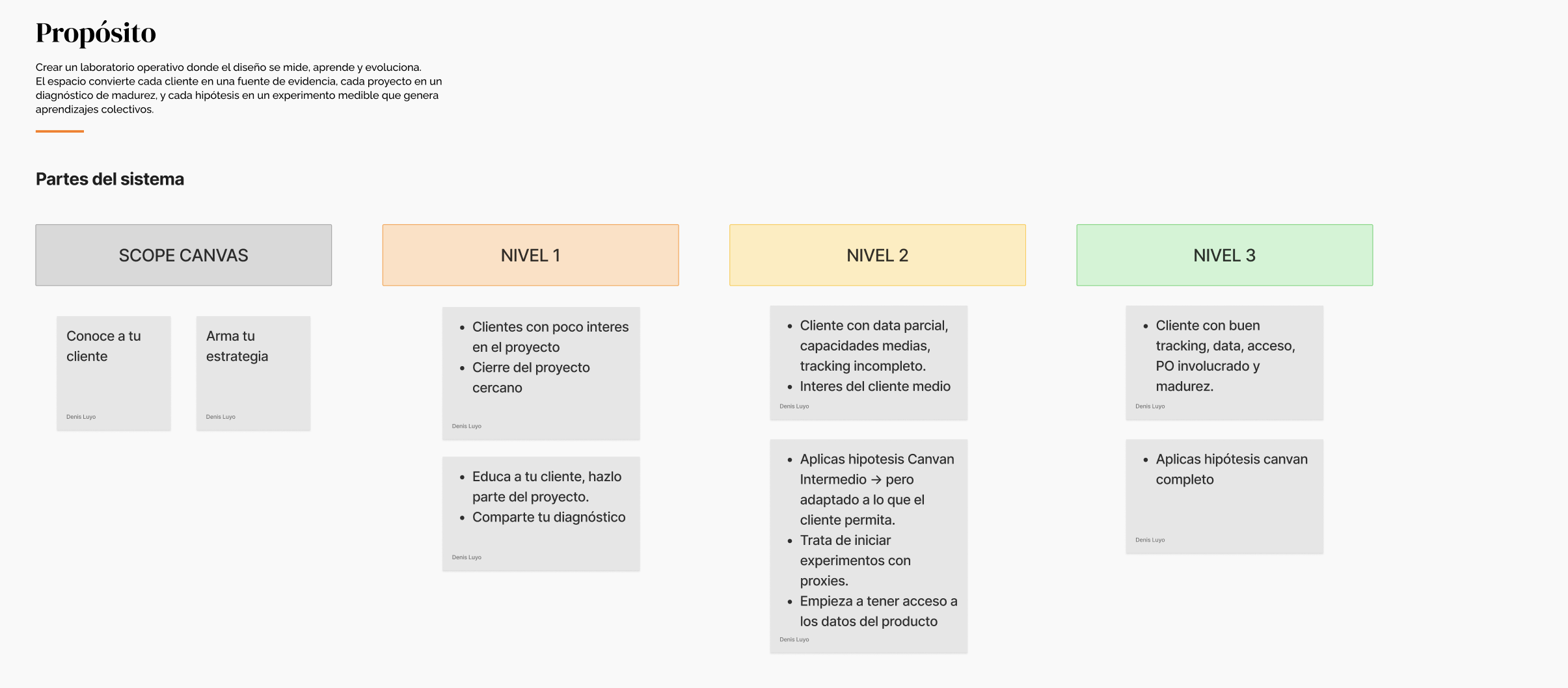
I built the maturity model, Scope Canvas, and hypothesis system to guide decisions with evidence.
How I worked
I led a working system to move from “what design should we make?” to “what do we want to achieve and how will we measure it?”
Diagnosis
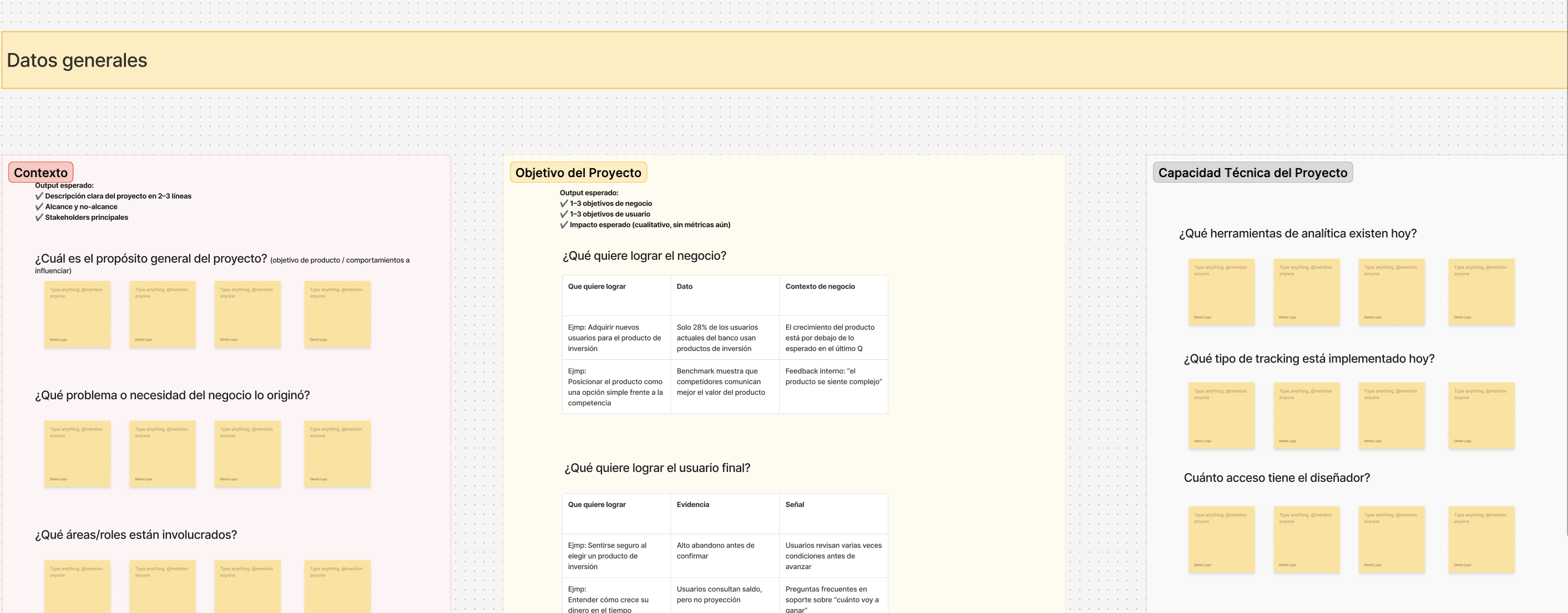
I facilitated sessions with the Scope Canvas to align the problem, objective, and expected behavior.
Decisions
I defined that not every project should measure impact from the start; some needed exploration.
Process
I introduced a maturity model, hypothesis system, and repeatable learning structure.
Deliverables
1. UX Metrics Framework
I designed a complete system to connect business goals, design decisions, and available evidence.
- Metrics framework adaptable by context.
- Maturity model with 3 project levels.
- Tracking system for continuous learning.
2. Scope Canvas and Diagnosis
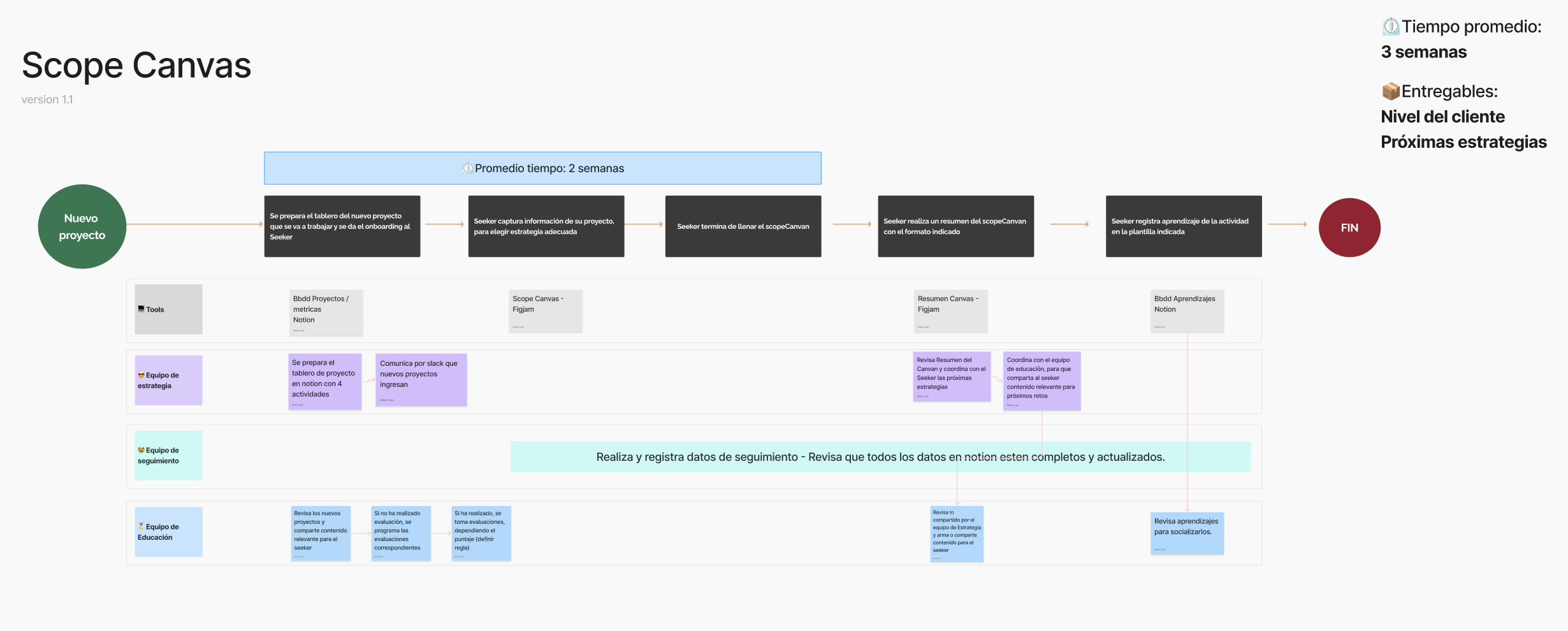
I created the Scope Canvas to capture context, stakeholders, problem, and goals before defining metrics.
I mapped flows and decision points to connect expected behaviors with metrics and learning.
3. Hypotheses and Learning
I designed a system to formulate hypotheses, decide what to measure, and document learnings by maturity level.
My contribution was making the process repeatable for a team of approximately 12 designers.
Impact
Projects with clear hypotheses to guide design decisions.
Decisions supported by some type of available evidence.
Maturity levels implemented to adapt the strategy.
Gallery
Learnings and improvements
-
01
Design with System
The success of a maturity model does not depend only on components, but on alignment and adoption across area leaders.
-
02
Metrics with Context
Metrics do not work without context; first you need to understand maturity, goals, and available evidence.
-
03
Judgment-led Leadership
I did not only design solutions; I designed a system for the team to make better decisions consistently.