Summary
Clip is a B2B e-commerce product for bookstores, minimarkets, and small businesses to stock and replenish Tailoy products independently.
I participated from product conception through development handoff: field research, architecture, MVP prioritization, user flows, UI kit, and a brand-aligned design system.
The challenge
Small businesses depended almost entirely on an assigned sales rep to capture orders, answer questions, and suggest new products.
Operational dependency
Orders moved forward only when the sales rep was available, slowing capture, registration, and order evaluation.
A hard-to-scale model
Growth meant adding human coverage, not increasing system capacity or enabling autonomous product discovery.
The challenge was to consolidate a digital channel without breaking the sales rep-client relationship or the expectations of business, technology, pricing, and cost teams.
Goal
Design and validate a B2B e-commerce MVP that allowed small businesses to manage purchases and replenishment independently.
Commercial self-service
Enable search, selection, and replenishment without depending on a sales advisor.
Purchasing as a business decision
Help owners evaluate opportunities, assortment, and rotation through the digital experience.
Fast, robust MVP
Validate purchasing behaviors without overbuilding the first release.
My role and scope
I was the Product Designer and worked with the Product Owner, research, technical architecture, and key business stakeholders.
Research and workshops
I mapped needs from business, sales reps, and store owners through interviews, field work, and alignment workshops.
Architecture and flows
I defined information architecture, user flows, and the full digital web experience.
UI and handoff
I built the UI kit, design system, documentation, and experience metrics for development.
How I worked
I worked from evidence: early prototypes, internal stakeholder sessions, and validation with real users to move conversations from opinion to decision.
Understanding the model
I analyzed the portfolio-based sales model and tensions across business, technology, sales, pricing, and cost teams.
Tangible prototypes
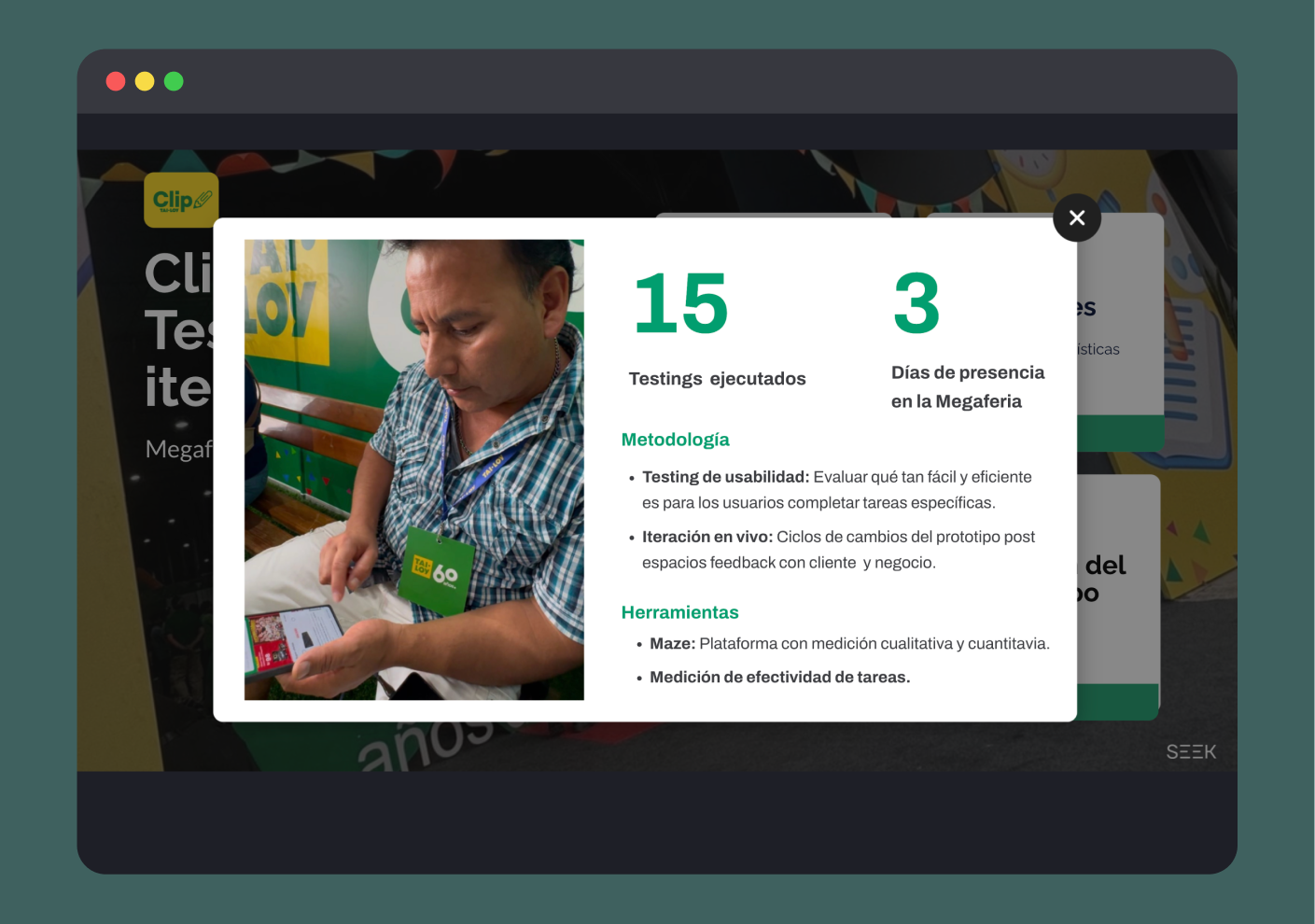
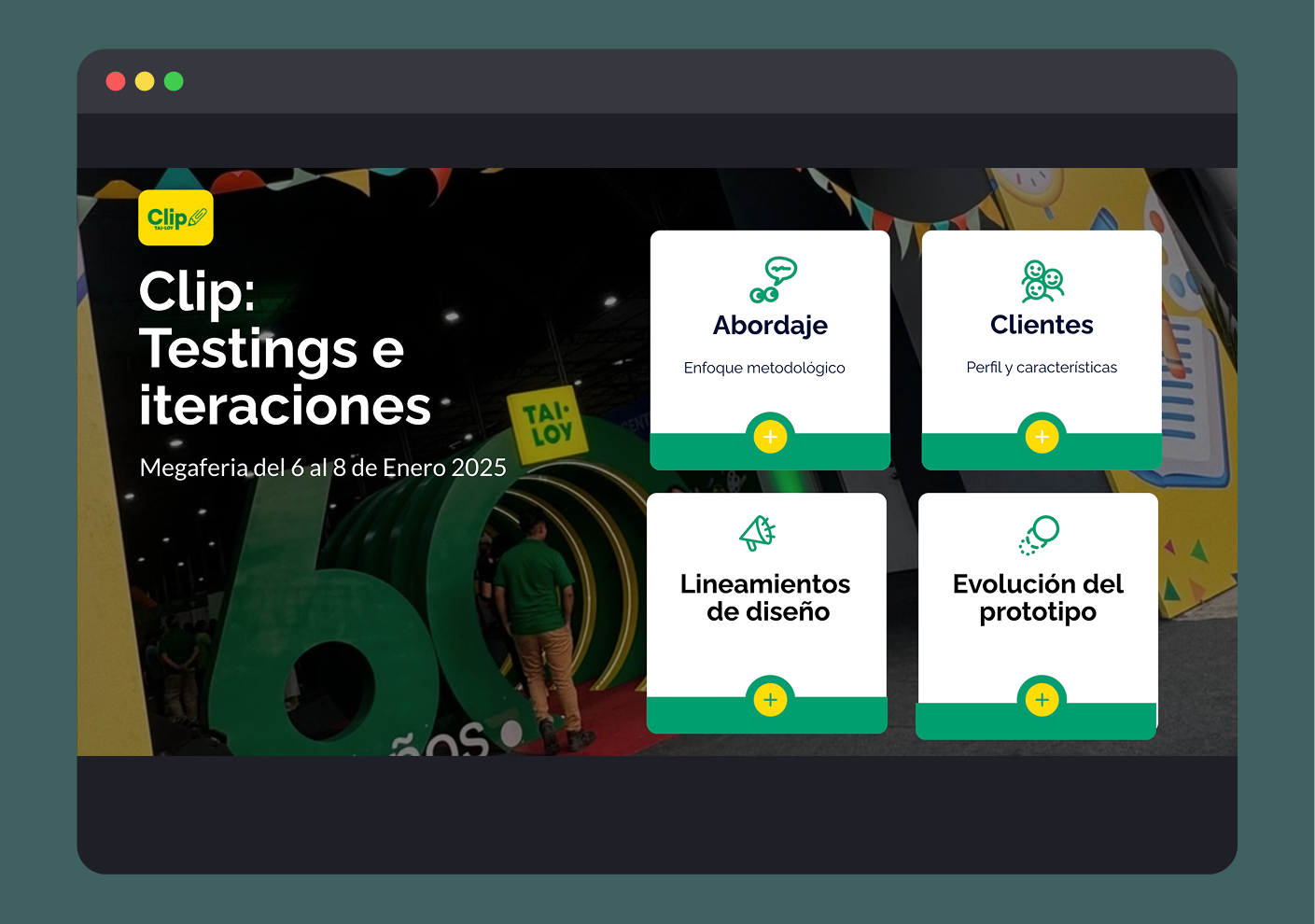
I brought prototypes to workshops and an entrepreneur fair to validate the experience before development.
MVP prioritization
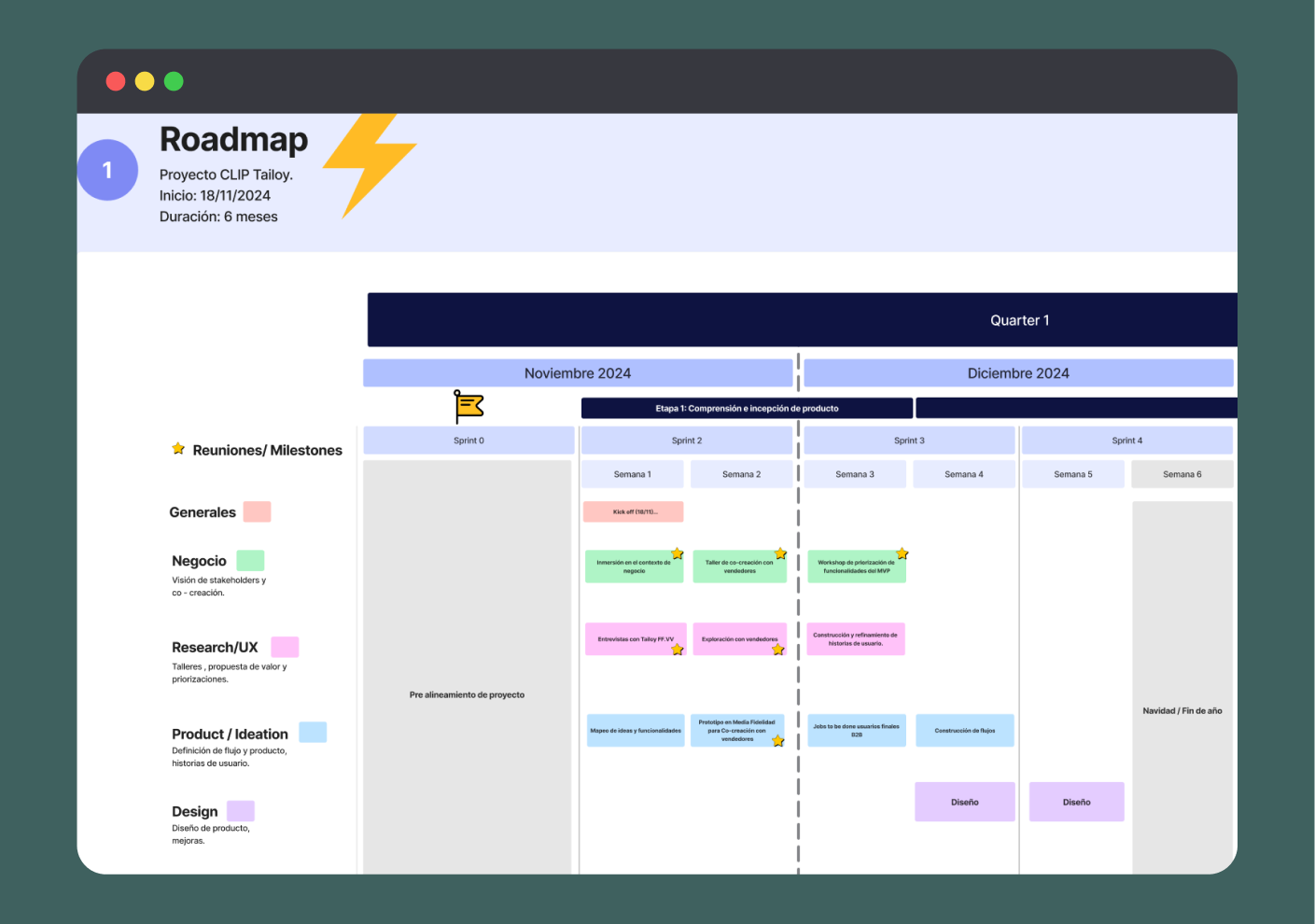
I defined key features, the service map, and the implementation roadmap with the team.
Deliverables
1. Digital product architecture
I structured navigation, categories, search, replenishment, and purchasing flows for small businesses.
- Information architecture focused on customer needs and business priorities.
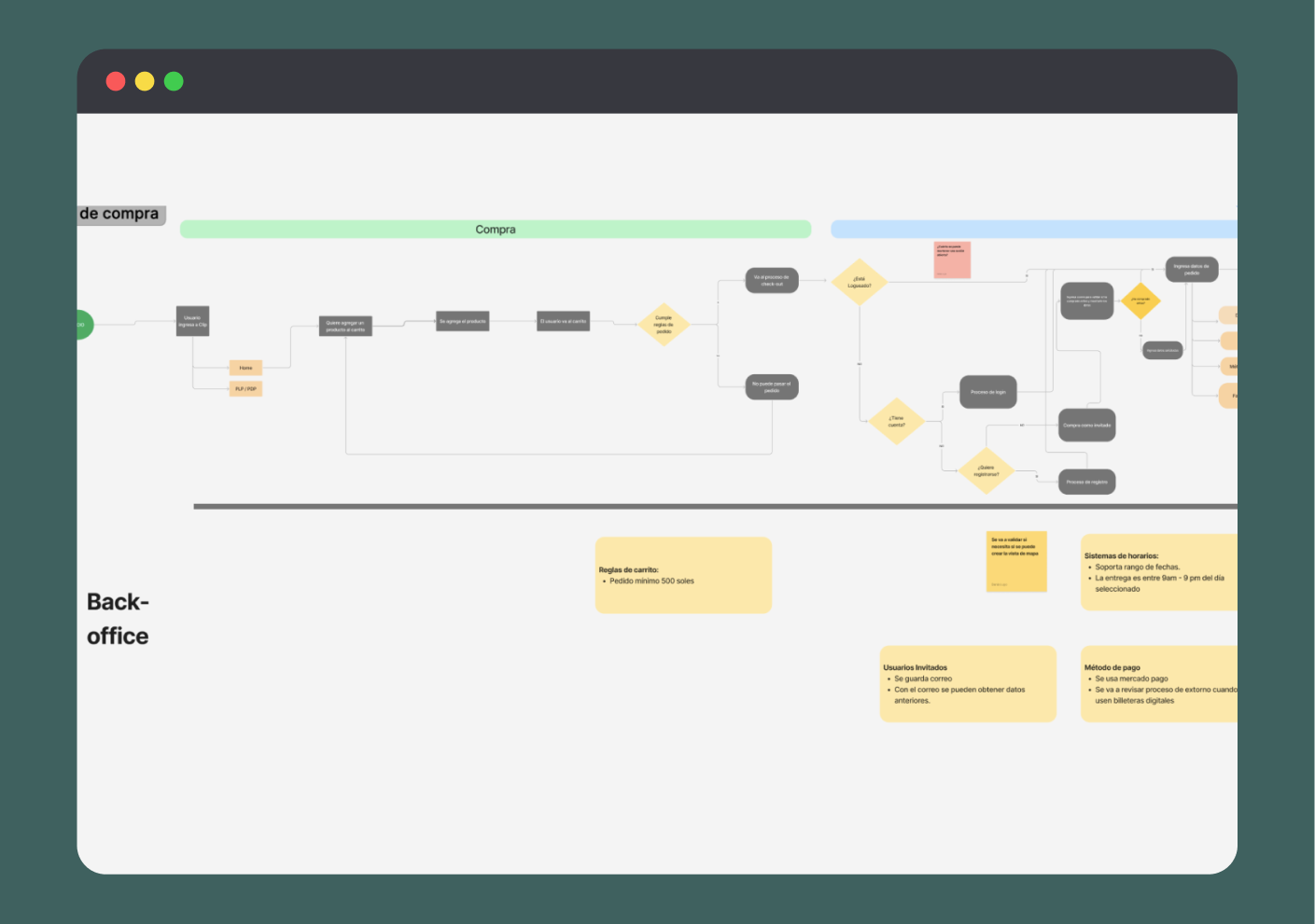
- User flows for the full experience, from exploration to order.
- Service map connecting customer, sales rep, and internal operation.
2. Web UI design and prototypes
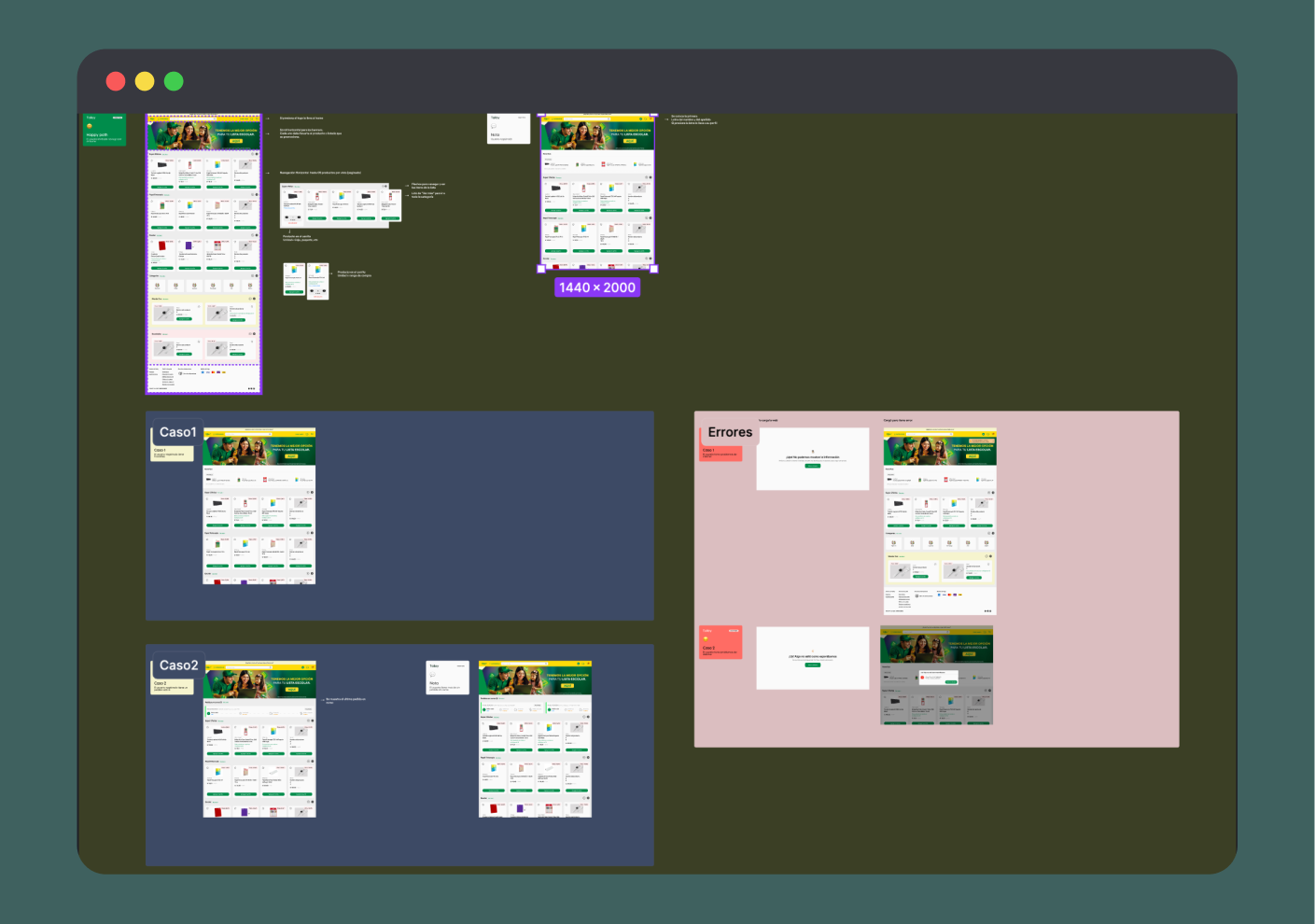
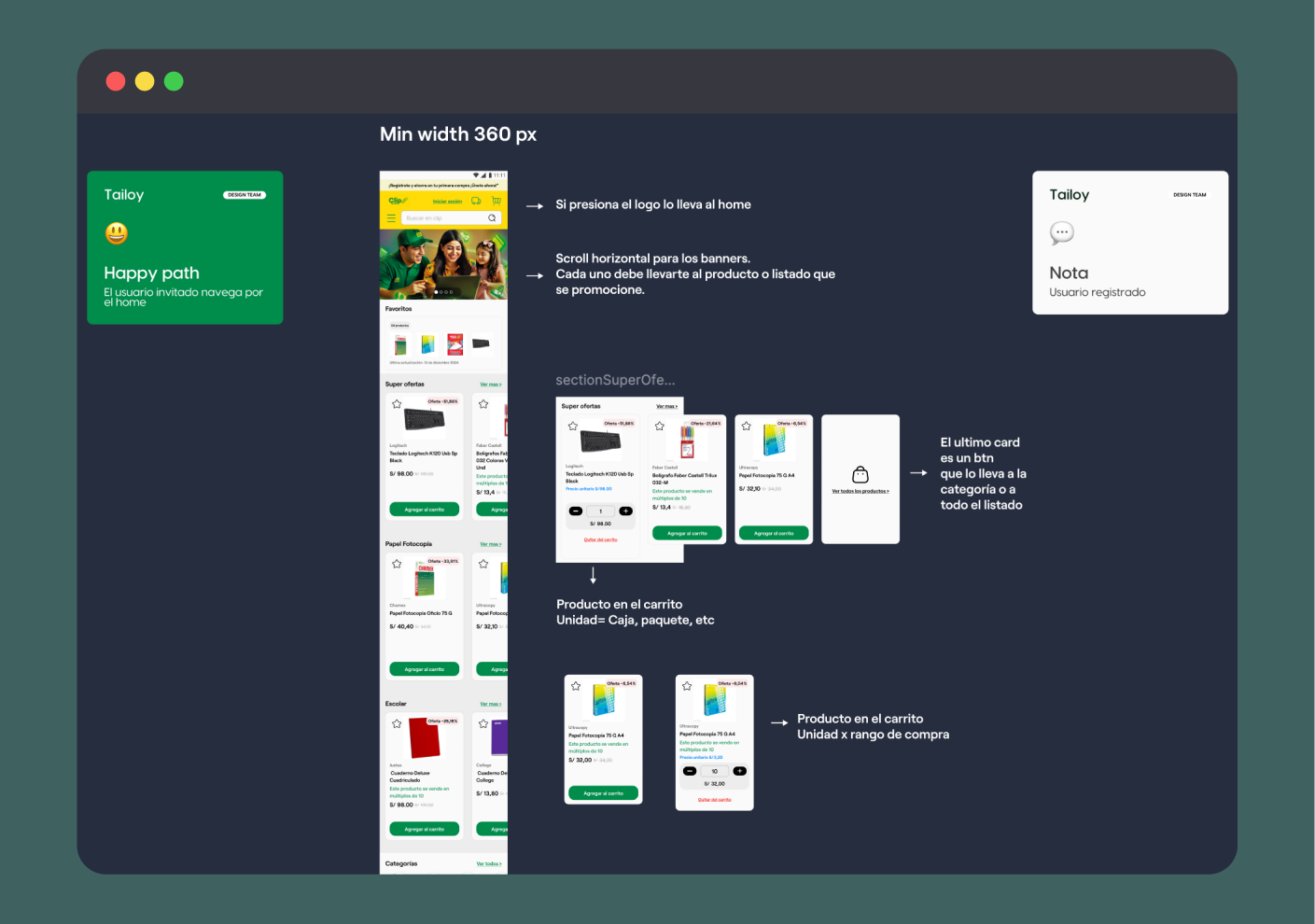
I designed the visual e-commerce experience and prototypes for stakeholder alignment and real-user validation.
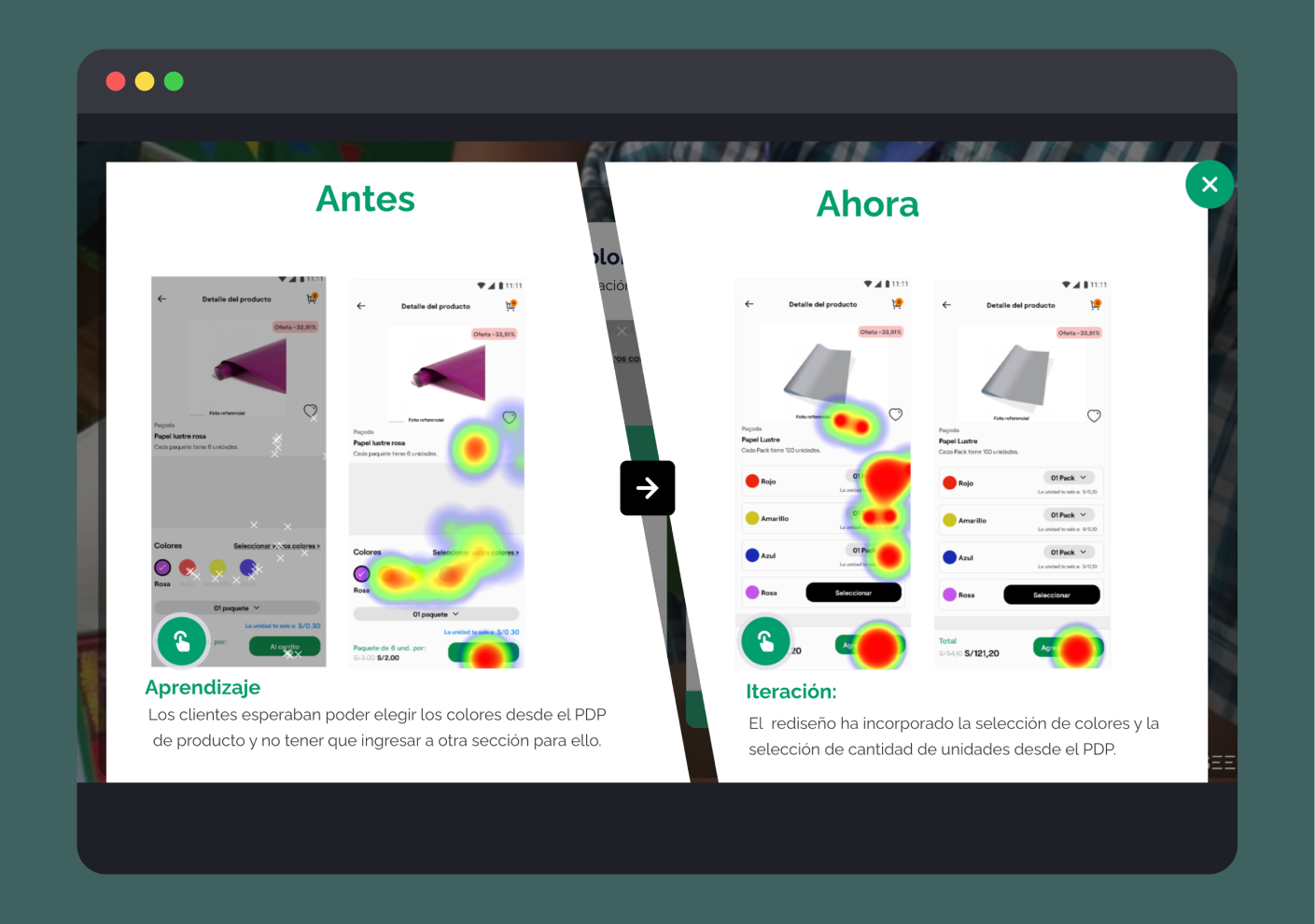
The prototype helped test purchasing behaviors before investing in development.
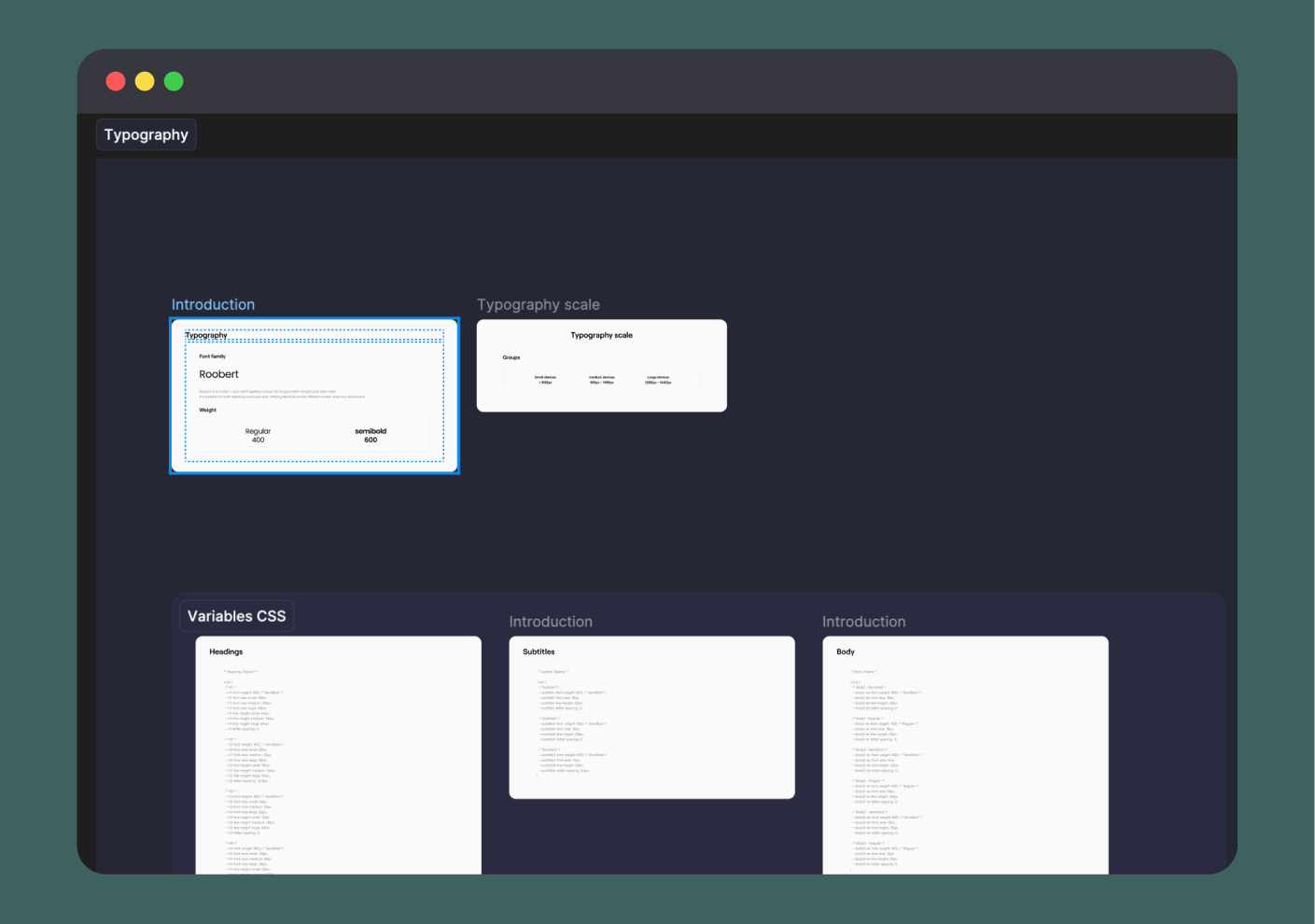
3. UI Kit, Design System, and handoff
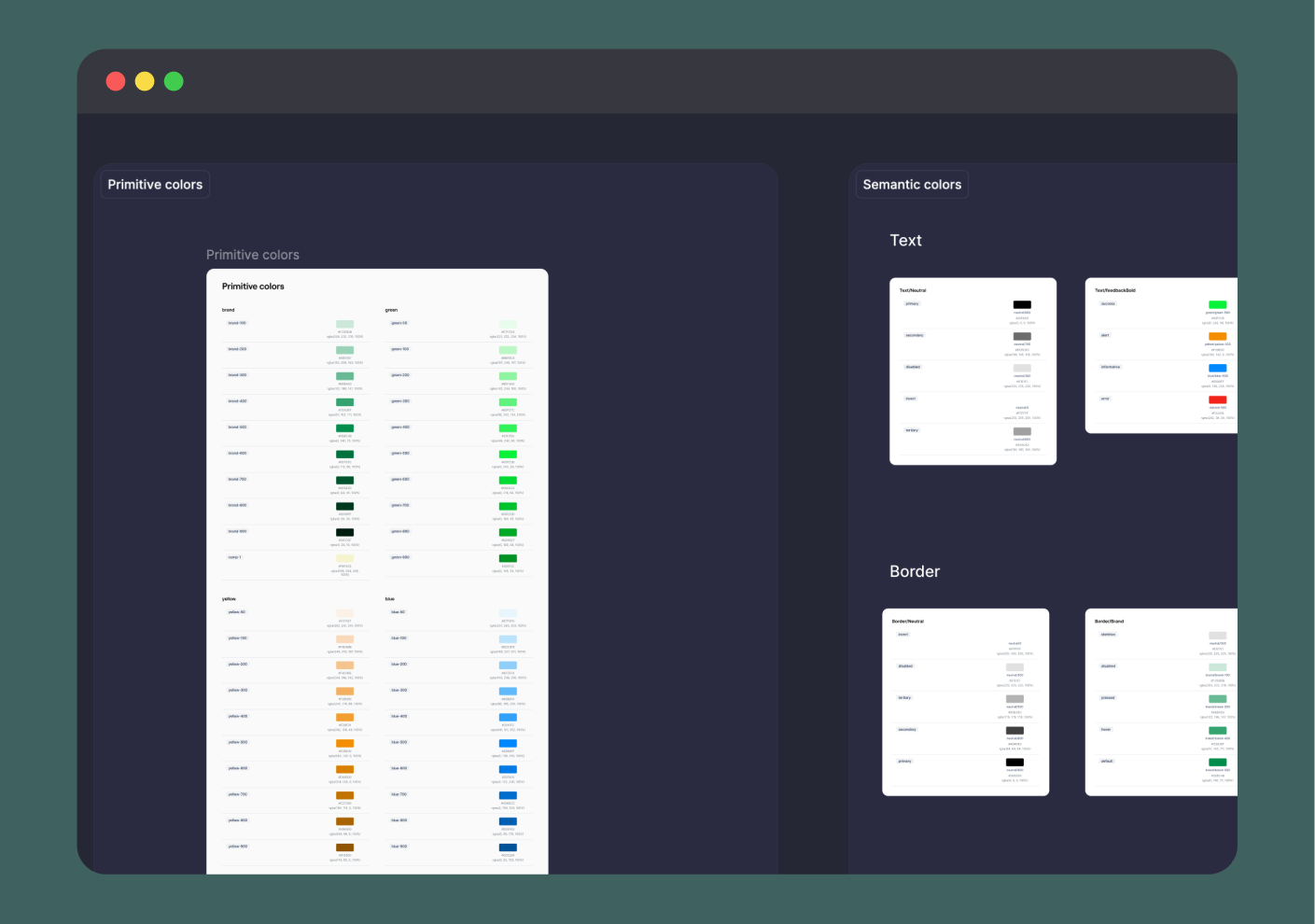
I built the brand-aligned component structure, development documentation, and experience metrics.
The foundation allowed the product to scale without rebuilding the interface from scratch.
Impact
A new self-service digital sales channel for small businesses.
Product validated early through prototypes before development handoff.
Architecture and design system to scale the experience consistently.
View Clip demo
Explore the digital channel designed for small businesses to purchase, replenish, and discover Tailoy products with more autonomy.
Project gallery
Learnings
- 01
Digitizing a channel also changes human relationships
The product was not just online purchasing: it affected the sales rep's role and portfolio relationship.
- 02
Evidence aligns better than opinion
Prototypes and findings helped turn competing expectations into decisions around something tangible.
- 03
An MVP needs clear boundaries
The goal was to validate purchasing and product-rotation behaviors, not launch a complete product in the first cycle.